NeuroMovement®
Children & Parents
Shifting from Fixing to Connecting
Supporting Your Child’s Learning, Growth, & Well-Being
Every child learns in their own way. If you are looking for a gentle, respectful, and highly effective way to support your child’s development, NeuroMovement® offers an approach that honors your child’s uniqueness and strengthens the learning process itself.
My work with families includes hands-on lessons for the child and coaching for parents. Together, these two forms of learning create meaningful and lasting change.
An Alternative Approach to Learning & Child Development
The Anat Baniel Method® NeuroMovement® takes a different approach from most traditional interventions. It is used worldwide with children experiencing a wide range of movement, cognitive, and social challenges.
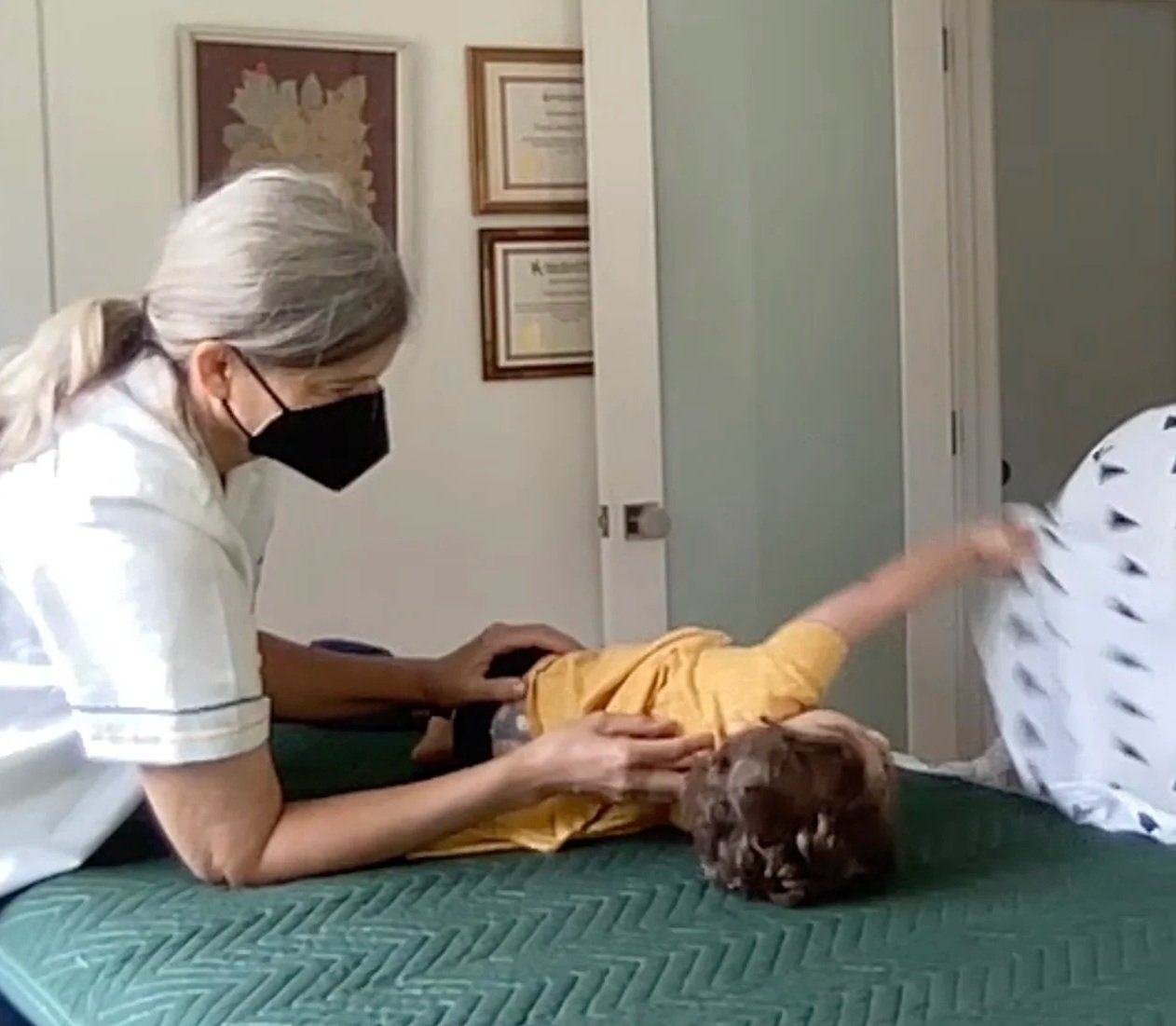
Rather than drills or repetitive training, NeuroMovement® uses gentle movement and attentive connection to communicate with the brain. Practitioners meet the child where they are—physically, emotionally, and mentally—and follow their responses moment by moment.
This creates a playful, interactive learning process, similar to how young children naturally explore and develop. Through this respectful interaction, the child’s sense of agency and capacity to learn grow stronger, allowing new skills to emerge from within.
While many families look for “alternative therapies” to support children with conditions such as cerebral palsy, autism, or after a stroke, it’s important to understand that NeuroMovement is about learning and not a medical therapy.
NeuroMovement lessons not only provide rich and varied learning experiences that result in improvements in movement, thinking, and emotional regulation, but they also upgrade the learning process itself — children learn to learn.
Working With the Child
Providing the Conditions for Learning
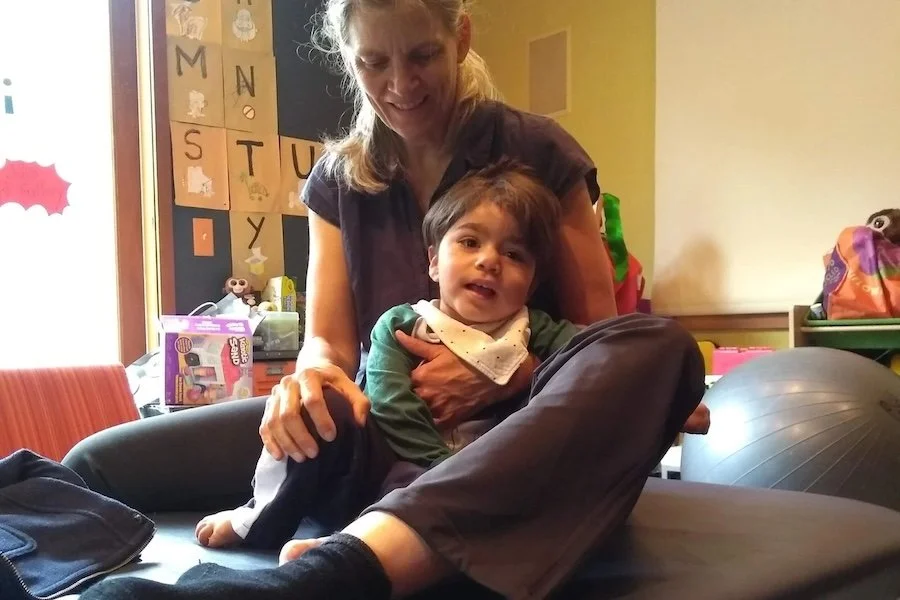
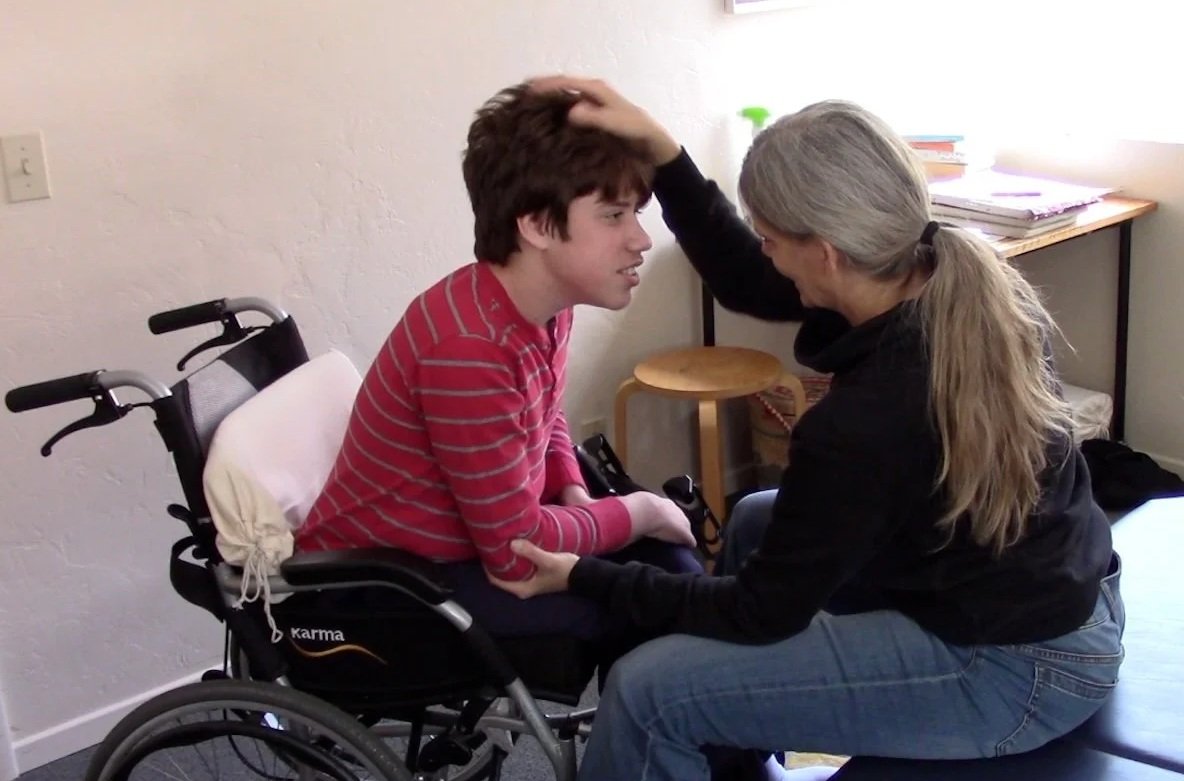
My role is not to train or fix the child, but to create the conditions in which new learning can emerge. Through gentle listening touch, movement, and responsive interaction, I invite the child’s brain to notice differences, explore variations, and discover new possibilities.
There is no need to perform or meet expectations. We explore in a respectful, playful way that awakens curiosity and supports organic, self-driven learning.
Working With the Parents
Shifting from Fixing to Connecting
Parents play an essential role in their child’s progress. When a child receives a diagnosis, it’s easy to focus on what seems “wrong” with the child, but real change comes from improving the learning process—and this begins with how we relate and connect.
In parent coaching sessions, you learn simple, practical tools t help you create moments where learning can happen naturally, involving you in your child’s growth in a completely new way.
What I Offer
Lessons, Intensives, and Ongoing Support
You can begin with:
Individual lessons for the child (hands-on, in person)
Parent coaching sessions (online or in person)
Intensives: 4–10 sessions within one week, followed by time for rest and integration
Intensives often lead to the quickest progress because your child receives a concentrated learning experience. Parent coaching between intensives helps the learning continue at home.


Who Can Benefit
NeuroMovement® can benefit every child — those facing challenges in movement, learning, or development, as well as those already thriving and ready to grow further.
This work is not about fixing what’s wrong, but about awakening the process of learning — in both the child and the parent. As the child discovers to move, think, and feel in new ways, parents also learn to see and connect differently. They begin to recognize moments of discovery, slow down, and create conditions that nurture learning in daily life.
I don’t focus on limitations, I focus on possibilities. I see people engaged in the process of becoming. My role is to support that process — bringing variation, attention, and presence so the brain can sense differences and make new connections.
NeuroMovement® supports children with developmental delays, cerebral palsy, and autism spectrum disorder, as well as neurotypical children. And it supports parents, too — helping them gain insight, confidence, and new ways to connect with their child through shared learning and curiosity.
Children with Special Needs
While every child and family could benefit from improving their learning process with NeuroMovement, it is especially valuable for children with special needs or developmental challenges, including:
Learning difficulties
Anxiety and challenges with self-regulation
Cerebral Palsy
Autism Spectrum Disorder (ASD), Asperger’s Syndrome
ADHD, ADD
Undiagnosed developmental delays
Brachial plexus injury
Torticollis
Scoliosis
Hypertonia and Hypotonia
Stroke or brain injury
Down Syndrome, Fragile X Syndrome
Other genetic or neurological disorders
What You May Notice
Your child is happier
New skills
More comfort and ease in movement
Reduced spasticity
Greater strength and mobility
Greater awareness of self and others
Better self-regulation
Improved coordination and balance
Greater curiosity and willingness to try new things
More patient and better in problem-solving
Improvements in communication
Feeling more connected as a family
These shifts often emerge gradually and naturally over the course of an intensive and in the weeks following the lessons.
What Parents Say