"What you truly learn best will appear to you later as your own discovery."
— Moshe Feldenkrais
Learn & Explore
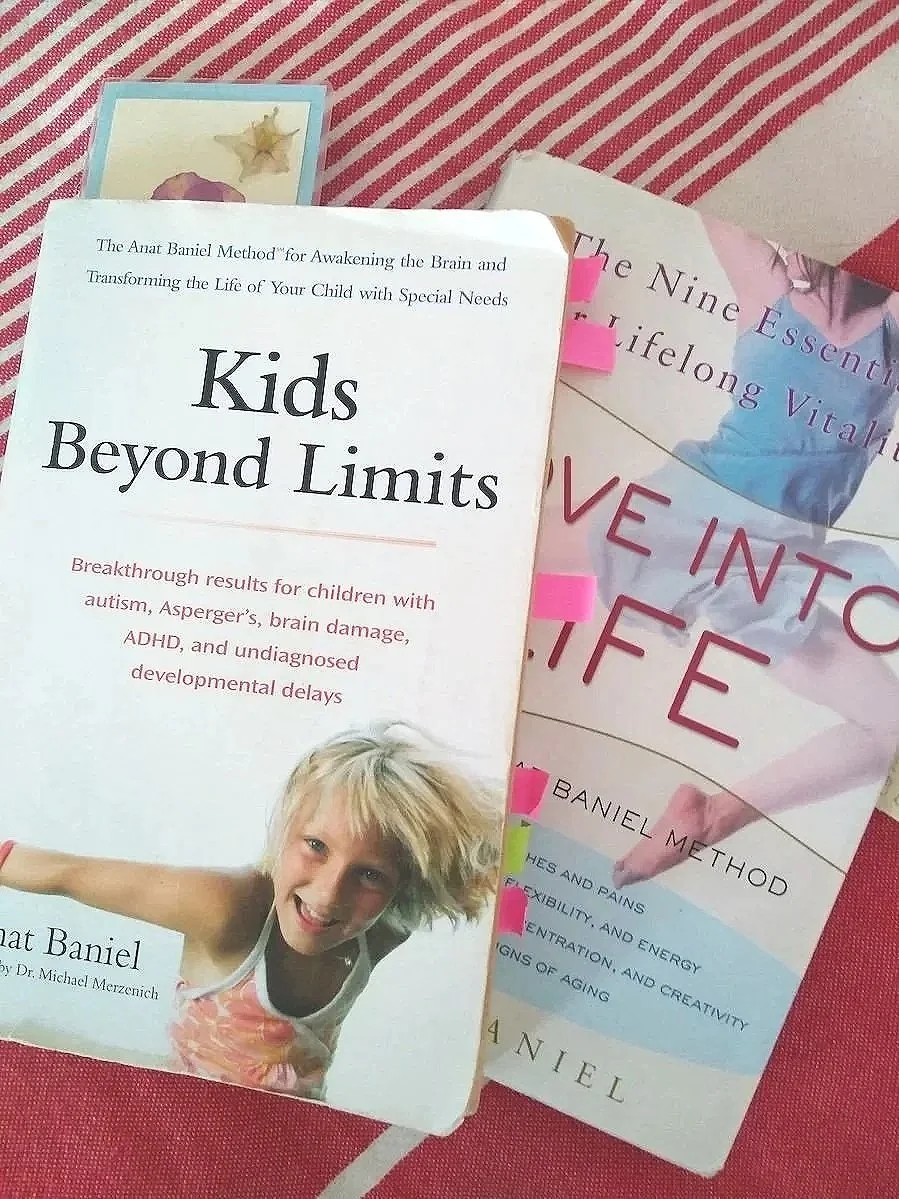
What is the Anat Baniel Method® NeuroMovement®
The Anat Baniel Method® NeuroMovement® is a learning-based approach that invites the brain to reorganize, refine and expand its possibilities through movement, attention and curiosity. Rather than focusing on exercises, drills, or “correcting” what is wrong, it creates the conditions for the brain to discover in an organic way easier, more efficient, and more comfortable ways of moving, sensing and being. For people of all ages, from children to seniors, the work opens up new options—movement becomes not just an action, but a rich conversation between the body and the brain.
Origins of the Method
NeuroMovement® grew out of the Feldenkrais Method®, created by Dr. Moshe Feldenkrais. Anat Baniel, who studied and worked closely with Feldenkrais, expanded his work by integrating new insights from neuroscience, her work with children, and the study of learning and brain plasticity.
While Feldenkrais focused on improving abilty through gentle movement explorations, NeuroMovement® builds on this foundation with the Nine Essentials—core principals of neuroplasticity and practical tools that actively wake up the brain’s ability to form new connections. While most of these principles are already found in the Feldenkrais method, Anat Baniel brought them into the foreground and made them applicable in daily life situations.
In this evolution, the work became more accessible, more structured for children and adults with neurological challenges, and more clearly grounded in current brain science—while staying true to the original principles of gentle movement, awareness, and learning.
The Approach
This list of key aspects of the shared approach of the Anat Baniel Method® NeuroMovement® and Feldenkrais Method®, is based on a recent article by my two teachers Anat Baniel, Eilat Almagor, and colleagues in Frontiers in Integrative Neuroscience titled “From fixing to connecting...”
Read the full article.
Educational, Not Prescriptive
Both Feldenkrais Method and Anat Baniel Method NeuroMovement are positioned as learning-based modalities rather than exercises, drills, or therapies designed to “fix” deficits.
The practitioner’s role is to create conditions for the person to discover new ways of organizing movement and sensing, rather than instructing them to perform a specific, “correct” way.
Start Where the Person Is
The process always begins by joining the person’s current state—physically, emotionally, and neurologically.
This means noticing how they move, sense, and respond right now, and working with that, instead of trying to impose an external standard or push them toward a specific skill.
Gentle, Varied Movement Interactions
Movements are slow, gentle, and varied, often involving small differences in direction, timing, or coordination.
The variation stimulates the nervous system’s capacity for neuroplastic change—the person feels differences and begins to self-organize in new ways.
There’s no repetition-for-drilling; instead, each variation is fresh and exploratory.
Movement + Attention = Learning
Attention is a key ingredient: when a person pays attention to how they are moving or sensing, the brain creates richer maps of the body and movement possibilities.
Movements are done slowly enough for the nervous system to detect differences—allowing for refinement of movement and perception.
Dyadic, Empathic Connection
Learning is not done to the person; it’s a two-way, in-the-moment exchange between practitioner and learner.
Practitioners listen with their hands, eyes, and whole presence, adjusting based on the learner’s responses.
This creates a sense of mutual trust and safety, essential for curiosity and learning.
Self-Generated Change
The aim is for the learner to initiate and own new patterns—to discover rather than be taught.
Instead of enforcing a “correct” way to move, the practitioner offers opportunities for the person to find options that feel easier, more efficient, or more pleasurable.
Whole-Person Learning
The process is not limited to motor improvement—changes in movement organization affect:
Thinking (clarity, flexibility)
Feeling (emotional regulation, sense of safety)
Interaction (social connection, communication)
By working with the whole person, the methods help develop broader self-image—how the person perceives themselves in space, in action, and in relation to others.
In short:
The learning process is about creating safe, varied, and attention-rich movement experiences in real-time connection, so the learner’s own brain can reorganize movement and perception. It’s an open-ended, curiosity-driven process where transformation comes from within the learner, not from external correction.
The Nine Essentials
Core Principles of Neuroplasticity
“ABM® NeuroMovement® fosters an organic learning process through movement, engaging the brain’s capacity to change itself at any stage of life. This opens new possibilities in physical, cognitive, and emotional function. By applying core principles of neuroplasticity, the brain creates new neural pathways and patterns. Anat Baniel translated these principles into practical, human terms—a profound contribution for people facing neurological challenges or injuries, helping them move beyond limitations.
”
Tools for Discovery
The Nine Essentials help to step out of habit and into fresh possibilities. In this space of curiosity, the brain gains the rich variety of experiences it needs to notice differences and upgrade itself. Time and again, we see surprising new solutions emerge—solutions far better than anything we could have prescribed.
Client Experiences